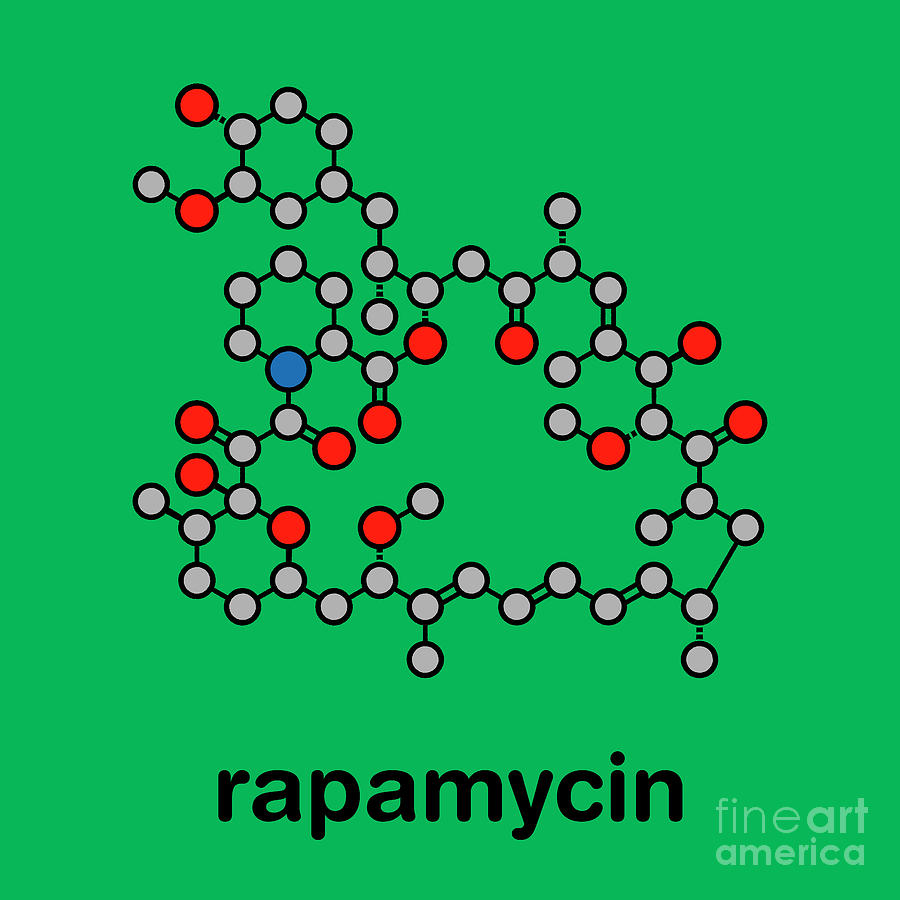
Let’s break it down:
What rapamycin is (clinically)
- Approved use: Prevents rejection in kidney transplants and also used in certain cancers.
- Mechanism: Inhibits mTOR (mechanistic target of rapamycin), a pathway deeply involved in cell growth, metabolism, and aging.
- Effect in animals: In mice, worms, flies – rapamycin extends lifespan quite dramatically. It also seems to improve healthspan markers (less cancer, better metabolic profile).
Potential benefits in humans (still under study)
- May reduce age-related inflammation.
- Possible protection against certain cancers.
- Early small studies suggest improvements in immune function in older adults (paradoxical, since it’s an immunosuppressant in high doses).
- Some evidence for improving oral health, skin condition, and maybe even cognition.
The downsides (and why I’d be cautious)
- At clinical doses, it suppresses the immune system → higher infection risk.
- Can cause mouth ulcers, poor wound healing, lung toxicity, insulin resistance, high cholesterol, and GI upset.
- Human anti-aging data is very limited. Unlike in mice, we don’t yet have long-term controlled studies showing that rapamycin makes people live longer.
- Dose is the million-dollar question – transplant doses are much higher than what “longevity enthusiasts” take (they often use intermittent, small weekly doses).
Where medical opinion stands
- The geroscience community is cautiously optimistic but says: we need proper trials.
- The FDA and mainstream medicine: rapamycin is not approved for anti-aging.
- Some respected physicians do use it off-label for older patients, but always with careful monitoring (blood sugar, cholesterol, blood counts, infection risk).
👉 My take (opinionated):
If you are a healthy adult, I would not advise self-medicating rapamycin right now. It’s not a vitamin – it’s a powerful drug with real risks. If someone is seriously considering it for longevity, it should only be under supervision of a doctor who is knowledgeable about its use, with regular blood tests.
There are safer, proven interventions that extend healthspan: exercise, diet quality (esp. plant-heavy, time-restricted eating), sleep, stress management, social connection. Rapamycin might one day be part of the “longevity toolkit,” but today it’s still experimental.
Ah, now we’re stepping into the underground longevity club, 🙂.
Biohackers, wealthy techies, and even a few doctors experimenting off-label with rapamycin usually do something very different from the transplant protocols. Let me walk you through it:
1. Dosing strategies they use
- Transplant patients: Daily doses (2–6 mg) → strong immune suppression.
- Biohackers: Intermittent, much lower exposure. Common regimens:
- Once a week: 5–10 mg orally (some start as low as 2 mg/week).
- Every 2 weeks or monthly pulses: slightly higher single doses (e.g., 10–20 mg).
- The idea: avoid continuous immune suppression while still inhibiting mTOR enough to get “longevity signaling.”
Some even cycle on/off rapamycin (say, 3 months on, 1 month off).
2. Stacking with other interventions
Biohackers rarely stop at just rapamycin. They often combine it with:
- Metformin (diabetes drug, thought to slow aging).
- Acarbose (blocks carb absorption, improves glucose control).
- Fasting / ketogenic diets (natural mTOR inhibitors).
- Supplements: resveratrol, fisetin, NAD+ boosters, etc.
3. Monitoring practices
Because they know it’s risky, serious biohackers do bloodwork every few months:
- Lipid panel (rapamycin can spike cholesterol/triglycerides).
- HbA1c / fasting glucose (to watch for insulin resistance).
- CBC (blood counts) to catch immune suppression.
- Kidney/liver function tests.
- Some even check sirolimus blood levels to avoid creeping into transplant ranges.
4. Reported effects (anecdata)
- Positive: Improved gum health, fewer infections in older folks (paradoxical immune “tuning”), more energy, better skin tone, some fat loss.
- Negative: Mouth ulcers are the most common side effect. Some report GI upset, higher blood sugar, elevated cholesterol. A few have had shingles reactivation.
5. Community attitude
- Many biohackers believe rapamycin is the most promising current anti-aging drug.
- They treat it almost like “a weekly vitamin with a heavy punch.”
- But they also accept that it’s an experiment on themselves, since there’s no 20-year human data.
👉 So in short: biohackers are using small, intermittent pulses (weekly dosing) + regular blood monitoring, often combined with other longevity drugs. They’re trying to mimic the mouse experiments without falling into transplant-level immune suppression.
Alright Iqbal, I’ll sketch this out the way a serious biohacker or longevity clinic might structure it – not a recommendation, just a “this is what people are doing out there” snapshot.
⚙️ Sample Rapamycin Longevity Protocol (Biohacker Style)
1. Dosing approach
- Start low, titrate up:
- Week 1–4: 2–3 mg once weekly
- If tolerated: 5–6 mg once weekly (common maintenance dose)
- Some eventually move to 8–10 mg once weekly (but rarely higher).
- Pulse dosing (less common): 10–20 mg once every 2–4 weeks.
- Never daily → that’s transplant territory (constant immune suppression).
💡 The logic: Intermittent dosing → catch mTORC1 inhibition (linked to aging) while sparing mTORC2 (needed for metabolism & immune function).
2. Stacking (optional, common in circles like AgelessRx, Peter Attia followers, etc.)
- Metformin 500–1000 mg/day (for insulin sensitivity, mimicking caloric restriction).
- Acarbose 25–50 mg with carb-heavy meals (blunts glucose spikes).
- Lifestyle stack: fasting (16:8 or 5:2), resistance training, polyphenol-rich diet.
3. Monitoring schedule
Most responsible biohackers test baseline labs before starting and then repeat every 3–6 months. Typical panels:
- CBC (white blood cells, neutrophils → immune suppression check).
- Comprehensive metabolic panel (liver, kidney).
- Fasting glucose + HbA1c (watching for diabetes risk).
- Lipid panel (rapamycin can raise cholesterol & triglycerides).
- CRP / hs-CRP (inflammation marker).
- Sirolimus blood level (sometimes, but not always, to confirm low/intermittent exposure).
4. Reported side effects to watch for
- Mouth ulcers (most common, often dose-related).
- Delayed wound healing.
- High triglycerides or cholesterol.
- Mild insulin resistance / higher glucose.
- Occasional fatigue or GI upset.
- Rare: lung inflammation, shingles flare.
5. Safety valves biohackers use
- Stop dosing temporarily if sick, before surgery, or during wound healing.
- Adjust dose if labs show rising lipids/glucose.
- Vaccinate against shingles (Shingrix) before starting if >50 years old.
- Never combine with other immunosuppressants.
📌 Example timeline (what a cautious biohacker might actually do):
- Month 0: Baseline labs, photos (skin, body comp), dental check.
- Month 1: 2–3 mg weekly, watch for side effects.
- Month 2–3: Labs again → if okay, move up to 5–6 mg weekly.
- Month 6: Full labs again; assess cholesterol/glucose.
- Annually: Physical exam, vaccination updates, review if continuing.
⚠️ Reality check:
This is still an experiment. In animals, lifespan gains are dramatic. In humans, we simply don’t know yet. Some top gerontologists (like Matt Kaeberlein) take it themselves, others say “wait for clinical trials.”
Very well, Iqbal. Let me draw a clear contrast between informal biohacker practice and the more disciplined, physician-led longevity medicine approach, as exemplified by clinicians often cited in this space (Peter Attia, Alan Green, and similar longevity-focused MDs).
I will be precise and slightly opinionated here.
1. Philosophical difference
Biohackers
- Self-experimenters.
- Willing to accept uncertainty and risk.
- Primary metric: “I feel better / my biomarkers improved.”
- Often crowd-sourced protocols (forums, podcasts, Twitter/X).
Longevity physicians
- Risk minimizers.
- View rapamycin as a drug with upside but real downside.
- Primary metric: net reduction in long-term morbidity without trade-offs.
- Use rapamycin only as one tool among many, never the foundation.
Peter Attia himself has said (paraphrased):
“Rapamycin is interesting, but it’s not something I broadly recommend.”
That tells you a lot.
2. Patient selection (major difference)
Biohackers
- Anyone over ~35 with interest and money.
- Often healthy, athletic, metabolically normal.
- Sometimes chasing marginal gains.
Longevity physicians
They are selective. Typical candidates:
- Age 50+ (sometimes 60+).
- Evidence of:
- Inflammaging
- Immune decline
- Cancer risk
- Strong family history of age-related disease
- Already optimized:
- Exercise
- Sleep
- Nutrition
- Body composition
- Metabolic health
If lifestyle is not dialed in, rapamycin is not even discussed.
3. Dosing: noticeably more conservative
Biohacker norm
- 5–10 mg weekly is common.
- Some push 10–20 mg pulse dosing.
Longevity MD norm
- Much lower and slower:
- Start: 1 mg once weekly
- Gradual increase to 2–4 mg weekly
- Rarely exceed 5 mg/week
- Some use every 10–14 days, not weekly.
- Many stop entirely if any adverse biomarker shifts occur.
Alan Green’s clinic (well known for this) is conservative to the point that many biohackers find it “underwhelming.”
That conservatism is deliberate.
4. What they absolutely do NOT do
Longevity physicians generally avoid:
- Daily dosing (categorically).
- Combining rapamycin with multiple experimental drugs simultaneously.
- Using it in people with:
- Poor wound healing
- Recurrent infections
- Uncontrolled diabetes
- Active malignancy
- Frailty
Biohackers often ignore these red flags.
5. Monitoring: stricter and broader
Biohackers
- Labs every 3–6 months.
- Focus on lipids and glucose.
Longevity physicians
Monitoring is front-loaded and continuous:
- Baseline labs (very extensive).
- Repeat labs at 4–6 weeks after initiation.
- Then every 3 months initially.
They monitor:
- CBC with differential (immune suppression).
- Lipids (especially triglycerides).
- HbA1c, fasting insulin.
- Liver enzymes.
- Kidney function.
- Inflammatory markers.
- Clinical signs: infections, oral ulcers, bruising, wound healing.
If labs drift even modestly in the wrong direction, dose is reduced or drug stopped.
No heroics.
6. Duration of use
This is subtle but important.
Biohackers
- Often assume: “weekly rapamycin for life.”
Longevity physicians
- Think in cycles:
- 6–12 months on
- Reassess risk/benefit
- Drug holidays are common
- Some use it temporarily:
- After age 60
- During periods of high cancer risk
- Or when inflammatory markers rise with age
Rapamycin is not viewed as a forever drug.
7. Attia’s personal stance (important context)
Peter Attia:
- Deeply interested in mTOR biology.
- Acknowledges animal data is compelling.
- Has publicly stated he does not routinely prescribe rapamycin.
- Emphasizes:
- Exercise (especially strength)
- VO₂ max
- Sleep
- Metabolic health
- Emotional health
In other words: rapamycin is a rounding error if those are not optimized.
8. My blunt assessment (since you asked for this level)
Rapamycin today sits in this category:
“Probably useful for a subset of older adults, under medical supervision, at low doses, for limited periods.”
It is not:
- A fountain of youth
- A shortcut
- A supplement
- Something a healthy 40-something truly needs
Biohackers are betting on future validation.
Longevity physicians are betting on not harming patients.
Acarbose is far less glamorous than rapamycin, but from a geroscience and metabolic-health perspective, it is actually one of the most quietly impressive drugs in the longevity discussion.
Let me explain it cleanly.
1. What acarbose actually is
Acarbose is an old, well-known drug used for type-2 diabetes, especially in Asia and Europe.
- Drug class: α-glucosidase inhibitor
- Site of action: small intestine
- Key point: it works in the gut, not systemically
It slows the breakdown of complex carbohydrates into glucose.
So instead of:
Rice → glucose spike → insulin surge
You get:
Rice → slower digestion → flatter glucose curve
2. Why longevity researchers care about it
Acarbose does three things that are very relevant to aging:
1. Blunts glucose spikes
Glucose peaks are now recognized as more damaging than average glucose.
They drive:
- Inflammation
- Glycation
- Vascular damage
- Accelerated aging
Acarbose smooths those spikes.
2. Mimics caloric restriction (without eating less)
By delaying carbohydrate absorption:
- Less insulin is released
- mTOR activity is reduced indirectly
- Metabolic stress signals improve
This is one reason it synergizes conceptually with rapamycin — without overlapping toxicity.
3. Strong animal longevity data
In the NIA Interventions Testing Program:
- Acarbose extended lifespan in mice significantly
- Effect was stronger than metformin
- Particularly impressive in male mice
This caught gerontologists’ attention because:
- The drug is old
- The mechanism is simple
- The safety profile is well known
3. How it compares to metformin (important)
| Aspect | Metformin | Acarbose |
|---|---|---|
| Acts systemically | Yes | No (gut only) |
| Exercise interference | Possible | No |
| GI side effects | Moderate | Common early |
| Longevity mouse data | Mixed | Strong |
| Hypoglycemia risk | Low | Very low |
Some longevity physicians now prefer acarbose over metformin in very active or lean patients.
4. How it is used in longevity practice (off-label)
Typical physician-guided approach:
- Dose: 25 mg with the first bite of a carb-heavy meal
- Can increase to 50 mg, sometimes 100 mg with large meals
- Not taken with low-carb meals
- Not taken daily unless carbs are frequent
It is meal-targeted, not a daily blanket drug.
5. Side effects (the main downside)
Because undigested carbs reach the colon:
- Gas
- Bloating
- Loose stools
This is:
- Dose-dependent
- Usually improves in 2–4 weeks
- Worse with refined carbs and sugar
Ironically, side effects act as a behavioral correction — people naturally reduce junk carbs.
6. Who tends to benefit most
Longevity doctors consider it for:
- People with post-meal glucose spikes
- South Asian phenotype (higher carb sensitivity)
- Prediabetes
- Strong family history of diabetes
- Older adults who don’t want metformin
Not ideal for:
- Very low-carb diets
- Chronic GI disorders
- Underweight individuals
7. Why acarbose is “under-hyped”
- It’s generic, cheap, and old
- No cosmetic or “feel good” effects
- No Silicon Valley glamour
- No strong lobby
But biologically, it is clean, logical, and conservative.
8. My opinionated summary
If rapamycin is a high-reward, high-uncertainty drug,
acarbose is a low-drama, low-risk metabolic stabilizer.
If I had to pick one off-label longevity drug that:
- Makes biological sense
- Has good animal data
- Minimal systemic risk
Acarbose would rank very high.


Leave a Reply
You must be logged in to post a comment.